

Top Pro-Tips

Water deeply but infrequently to encourage deep root growth: apply 2.5 cm (1”) of water every week to 10 days unless it rains.
Do not cut grass too short. Set your blade at 8 cm (3”) or higher. Use a sharp blade and mow often. This could mean twice a week in Spring.
Leave clippings on the lawn when you mow. This will provide up to 50% of your lawn's need for nitrogen. Mulch mulch mulch!
Top dress your lawn with 1 cm of compost or 50/50 every year. This can be combined with over-seeding.
Thatch that is thicker than 1.5 cm (1/2") can impede the flow of water, air and nutrients into the soil. Power rake only when necessary.
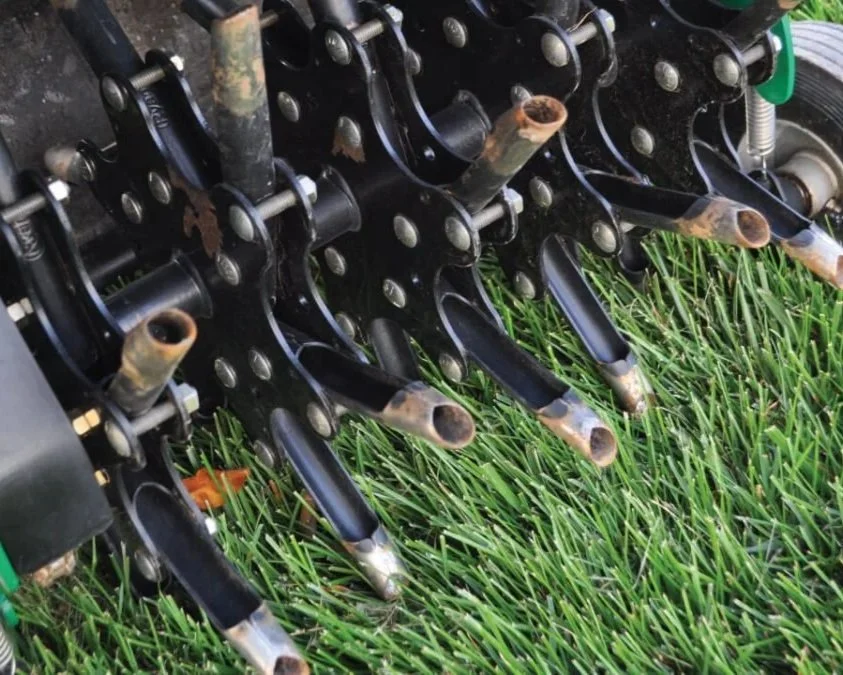
Aeration
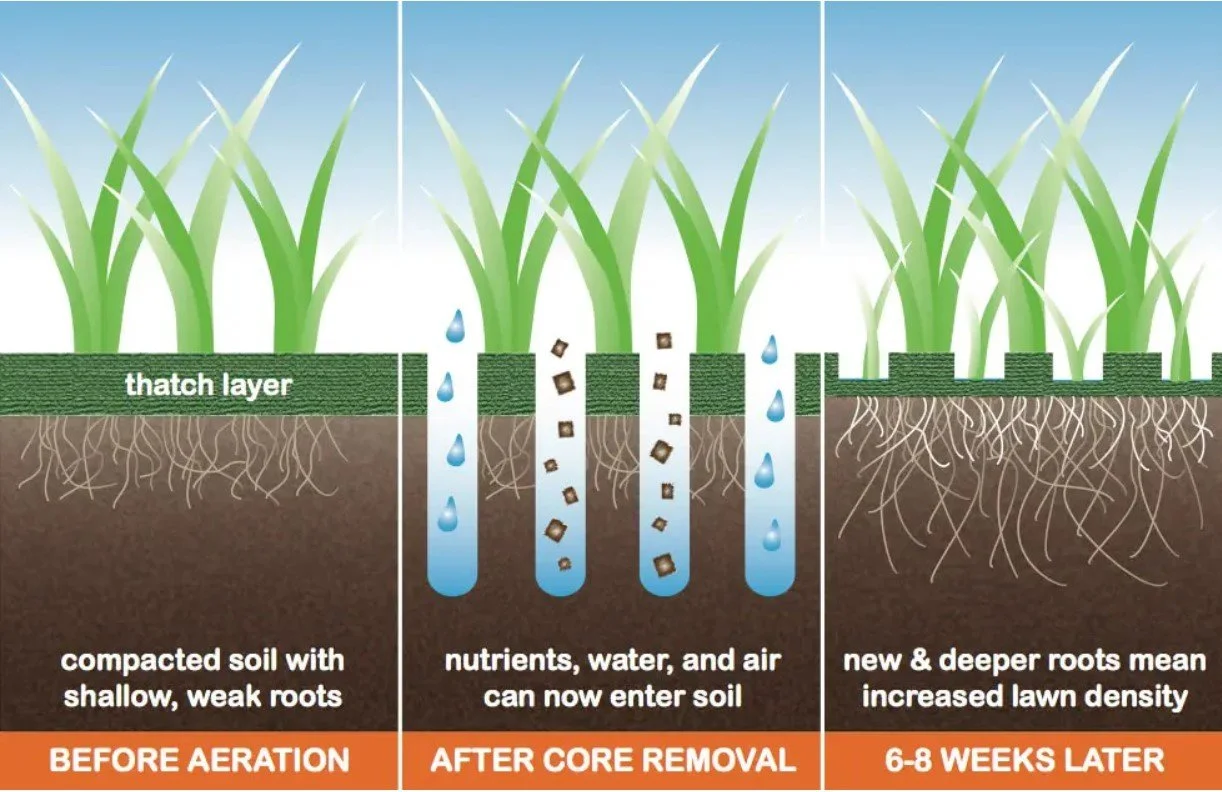
Aeration is a critical step to open your soil and allow water, nutrients, and oxygen to FUEL your grass plant's roots.
Loosens compacted soil
Brings helpful microbes to the surface
Allows your soil to breathe
Provides seeds with ideal germination conditions
Helps to breakdown thatch
Our soils North of Saskatoon are clay heavy and require regular aeration to promote healthy soils which in turn promote healthy turf.
Quick tip - Aerate 1-2/year or skip this step entirely. You will only see the benefits when done consistently and when you do see the benefits you WILL see the benefits!